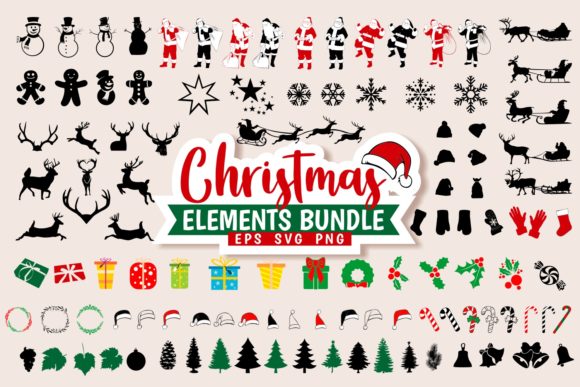
Christmas Bundle Elements Vector: A Designer’s Hands-On Review
Whenever I’m about to invest in a bundle, especially one promising a whopping 100 items, my first thought is practical: will this actually work on fabric? The Christmas Bundle Elements Vector arrives with a promise of versatility—EPS, SVG, PNG—all ready for print. But for embroidery, we’re thinking beyond the screen. We’re thinking about how these shapes will translate into stitches, how they’ll sit on a sweatshirt or a tote, and ultimately, how they’ll make a customer smile.
The Mood It Creates: More Than Just Holiday Clip Art
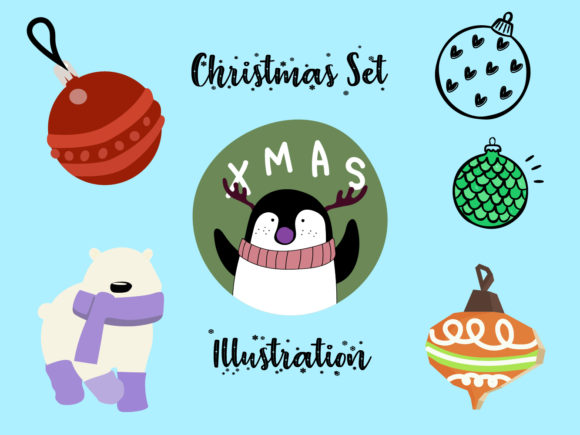
Opening this bundle, the immediate impression isn’t of overwhelming quantity, but of coherent character. The elements feel like a curated collection of holiday cheer, not a random assortment. There’s a visual personality here that leans classic yet playful—think timeless ornaments, friendly snowflakes, elegant greenery, and charming typographic accents. This isn’t a hyper-modern, abstract set; it’s warm and recognizable. That’s crucial for embroidery, where familiar, joyful motifs often resonate more deeply with gift recipients and shoppers.
For a project like a custom embroidered pillow cover for a holiday home décor line, this bundle’s mood is perfect. The shapes suggest a handmade, heartfelt quality even before stitching. When I visualize these elements stitched out, I imagine clean outlines and areas that could be beautifully filled or left as simpler running stitch details. The bundle feels like it belongs to projects meant to evoke nostalgia and warmth—a baby’s first Christmas blanket, a family’s annual holiday apron, or a boutique’s limited-edition tea towel.
Real-Life Embroidery Performance: Where It Shines (And Where to Be Mindful)
Let’s walk through a real scenario. I’m preparing a batch of embroidered tote bags for a small shop’s Christmas market. I pull a few favorite elements from the Christmas Bundle Elements Vector—a stylized wreath, a bell, a simple “Joy” script. My first step is always a test stitch on scrap fabric similar to the bag’s canvas. Here’s what I’m observing practically.
On stable, medium-weight fabrics like tote bag canvas, sweatshirt fleece, or quilt cotton for pillow covers, these vector-based designs should perform admirably. The clean lines promise good stitching clarity. The level of detail in many elements appears thoughtfully balanced—not so intricate that they become a dense, stiff patch on a baby garment, but with enough character to feel special on a cap or a patch.
However, this is where a designer’s judgment comes in. With 100 items, detail levels will vary. On textured or stretchy fabrics like some knits, or on curved surfaces like caps, you need to be selective. A design with many tiny, clustered details might not stitch out cleanly. Similarly, on dark fabric backgrounds, the thread color contrast becomes paramount. A complex element with lots of internal lines might need simplifying or a bold, high-contrast color palette to maintain visual appeal.
Small Details & Dense Areas: A Friendly Heads-Up
Some elements in such a large bundle inevitably include finer details or potentially dense fill areas. For embroidery, this translates directly to stitch density and hoop size. Before committing to a final product, like an embroidered patch for a jacket, test that specific design file. Check how small, closed corners stitch out. Look at any tiny lettering accents. Does it become a solid, stiff block, or does it retain a delicate, handmade look? This test tells you whether an element is best suited for a larger hoop application on an apron or should be adapted for a smaller, simpler project like a kitchen towel accent.
Always, always use the proper stabilizer for your fabric, and for designs with larger filled areas, consider whether a satin stitch or a lighter fill stitch would be more appropriate for the end-use—a blanket needing soft flexibility versus a decorative pillow cover where stiffness is less critical.
Impact on Your Product & Your Customer
Using a cohesive, professional-looking bundle like this directly affects perceived value. When a customer sees an embroidered sweatshirt with a harmonious set of holiday elements—say, a main motif on the front and a smaller, complementary element on the sleeve—it feels deliberate and high-quality. It builds customer trust in your craftmanship. For an Etsy seller or creative entrepreneur, this consistency can subtly reinforce brand reliability.
The giftability of items made with these designs is high. They’re universally understood Christmas icons, making personalized gifts—like a monogrammed stocking with bundle elements around it—immediately recognizable and delightful. For commercial embroidery projects, such as a run of logoed holiday gifts for a corporate client, this bundle offers a library of accents to tailor the design without starting from scratch each time.
A Note on Commercial Use & Digital Products
Since the product description states the files are ready for print and includes vector formats, it’s clearly intended as a design asset. As an embroidery designer using these for finished products—tote bags, apparel, patches—you must confirm the licensing terms for the bundle itself. Does it allow for commercial use of the embroidered end product? Always verify this before selling your handmade items or small shop merchandise. Similarly, if you’re a digital product seller creating printable mockups or using these graphics in digital previews, clear licensing is essential.
Practical Designer Notes Before You Stitch
My final thoughts are a checklist from the worktable. When you open the Christmas Bundle Elements Vector for your embroidery project:
- Test on scrap first. This is non-negotiable. Use fabric similar to your final product.
- Check thread color contrast. Run a version on light and dark backgrounds in your software, even if just a black-and-white mockup, to plan your palette.
- Inspect small details in your embroidery software. Zoom in. Look at how paths close and where stitches will accumulate.
- Confirm your hoop size can accommodate the design’s scale for the cleanest stitch-out.
- Match the element to the product. A large, detailed snowflake might be stunning on a stable tote bag; a simpler, open star might be better for a baby’s delicate knit sweater.
- Think about washability. For items like apparel or kitchen linens that will be laundered, designs with less extreme stitch density will wear more gracefully.
This bundle is a toolbox. Its value isn’t in downloading 100 files; it’s in having 100 starting points for beautiful, stitched holiday projects. With a practical, selective approach, the Christmas Bundle Elements Vector can become a genuine asset for your embroidery work this season, helping you create products that feel both professionally crafted and full of genuine holiday spirit.